
Waterpik vs Flossing: Which Is Better?
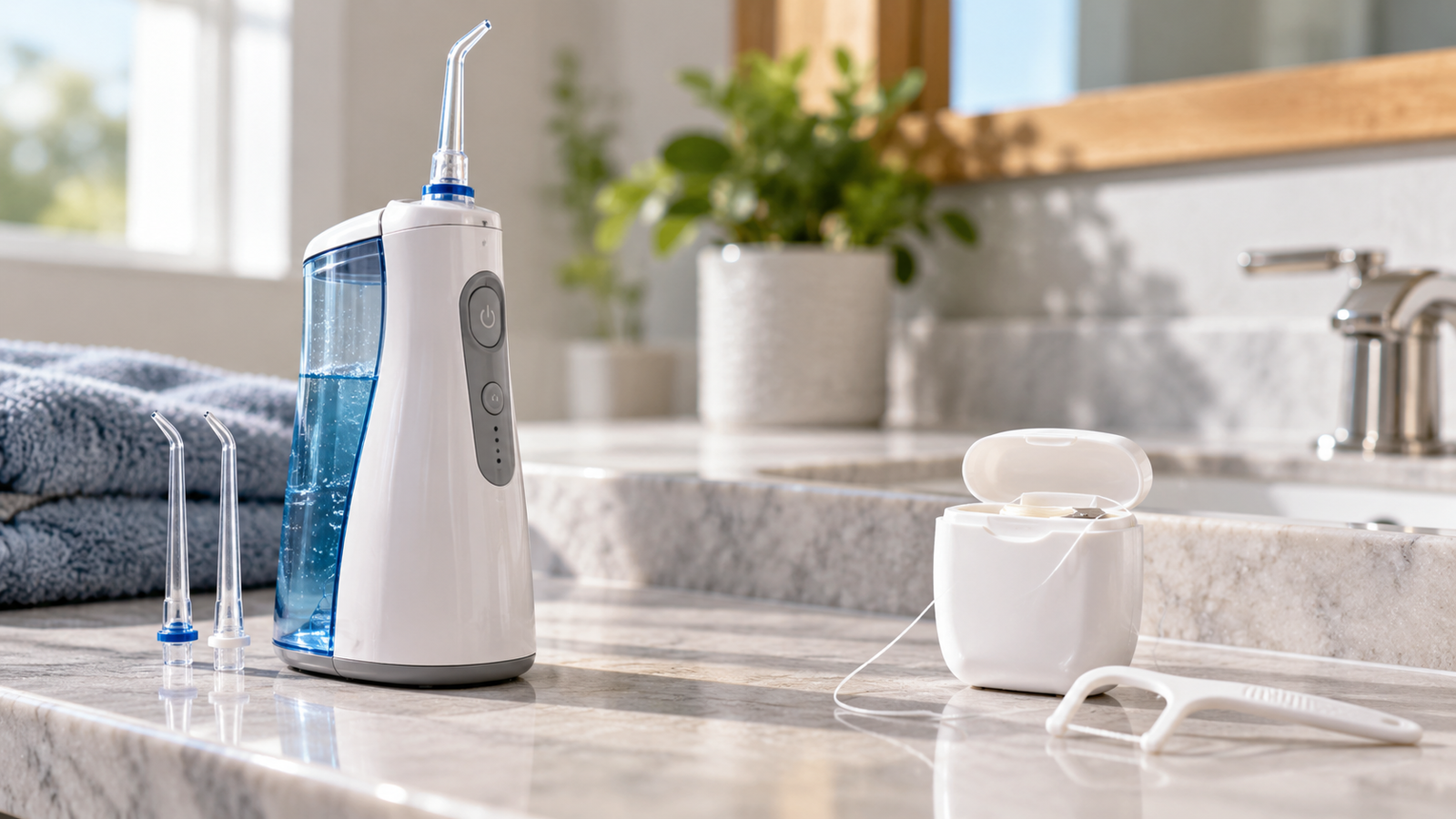
Waterpik vs Flossing: Which One Is Effective?
Cleaning plaque and food debris from in between your teeth is extremely important for proper dental hygiene. There are certain places that cannot be reached by a toothbrush. These are the places where the plaque and food debris collect which may also contribute to dental problems such as white spots on teeth.
If you compare waterpik VS flossing, then there are two techniques to choose from: waterpik and ordinary dental floss. Waterpik is a device that removes plaque using a stream of water. Flossing is a technique which utilizes a special thread to remove debris between your teeth manually.
Both methods can be beneficial.
What Is a Water Flosser?
A water flosser is a small instrument which is used for cleaning between teeth and along the gumline.The water flossers vary in size and design. Some water flossers are meant to stand in the bathroom all the time, while some are designed to be small enough to travel with you. If you use them correctly, they will help reduce plaque and improve the health of your gums.
However, a water flosser is not supposed to replace toothbrushing.This raises the common question: does a waterpik replace flossing? You should brush your teeth twice a day for two minutes and clean between your teeth once a day.
How Regular Floss Works?
The dental floss is a thin thread that is put between the two teeth. You then slide the thread along the side of your teeth and near the gum line, which will allow you to remove food particles and plaque from those areas of your mouth where the brush cannot clean.
There are many types of flosses, like waxed and unwaxed flosses, as well as floss picks and floss holders. The best type is that, which you can use properly and frequently.
It is very important how you use floss. Pushing it deeply into the gums can irritate your gums, while being hasty with the procedure can leave plaque on your teeth.
Key Differences Between the Waterpik vs Flossing
However, the key distinction lies in the approach each method employs to penetrate between your teeth.
Floss makes physical contact with the tooth's surface. It can prove helpful in the case of teeth with very tight gaps. A water flosser works on the principle of spraying water to clean between the teeth and gums.
Another important distinction is the nature of the experience. Some patients find flossing much easier while others find the water flosser less cumbersome to use.
One more distinction lies in convenience. While floss does not require any equipment, water or power supply, a water flosser needs quite some setup. Nevertheless, some people may find it easier to use with time.
When a Water Flosser May Be Helpful?
The use of a water flosser can be ideal in situations where manual flossing is hard to do.
This is because braces can cause spaces in which food particles and plaque can accumulate easily. Moreover, the wires and brackets can make it difficult to maneuver the floss. This can be easier with a water flosser.
The same can be said about those who have fixed bridges and other forms of dental work. According to the American Dental Association, a water flosser can be used as an alternative to those who cannot floss or have dental work which makes it difficult to do.
Hand control is another important aspect. There are those who find it difficult to use their hands for flossing. In this case, a water flosser can be more convenient to use than floss.
Is a waterpik better than flossing? It all depends on what you want to do.
When Traditional Floss Makes Sense?
Floss is one more simple and effective tool to remove plaque between teeth. In particular, it will be convenient for you if you have small gaps between your teeth.
This tool is also quite portable. One can store his or her floss either in the bathroom drawer, bag or travel set. There is no need to fill any water tank or use some devices.
Moreover, using this tool, you can control the process of brushing yourself. If you do everything correctly, you can reach both the sides of your teeth and the area near the gum line.
However, if the person feels confident about the procedure of brushing teeth, it would not be necessary for him or her to switch to some water flossers.
What Does the Research Show?
There is no single method proved to be better for everyone in research.
For instance, a systematic review on the efficacy of water flossing versus dental flossing among adults was published in the Journal of Indian Society of Periodontology. It included seven studies meeting the criteria. Water flossers were more effective at removing plaque, including plaque from hard-to-reach sites between the teeth.
Therefore, water flossing can be considered an alternative to regular flossing for some people, including those wearing braces, having dental prostheses, and those who lack fine motor skills.
However, it doesn't mean that one shouldn't use regular floss anymore because research might be different in many aspects.
Moreover, the ADA also supports the use of both manual interdental cleaning devices and powered water flossers.
Therefore, when answering the question, is water flossing as good as regular flossing, it is better to look at individual cases.
How to Choose the Right One?
Consider regular floss if:
- Your teeth have tight spaces.
- You are comfortable using floss correctly.
- You do not want to use a device.
Consider a water flosser if:
- You have braces or fixed dental work.
- You have trouble handling regular floss.
- You find water flossing easier to continue every day.
- You want another way to clean around the gumline.
When comparing water flosser vs floss, there is no need to choose based only on what seems more advanced. A simple tool that you use properly every day can be more useful than a device you rarely use.
Tips for Better Cleaning Between Teeth
- No matter which technique is chosen, consistency is crucial.
- Floss in between your teeth daily. It takes time to clean in between all of your teeth. For flossing, do not force the floss into the gums but let it glide gently in between each tooth.
- When using a water flosser, follow the instructions for the specific device. Point the water stream in between the teeth and along the gum line. However, do not apply too much pressure.
- Interdental cleaning needs to be done alongside brushing. The recommendation of the ADA is to brush teeth twice daily and floss teeth once a day.
- If the process of cleaning in between your teeth is painful and leads to bleeding, consult your dentist. Constant bleeding of gums may indicate the need for professional care.
Conclusion
Water flossers and regular dental floss have the ability to clean the areas that a toothbrush is unable to clean. Not necessarily will one be better than another because neither will work for everybody.
Regular flossing is simple, inexpensive, and works well in small spaces. Flossing with water could be easier for those who have braces, dental work, or difficulty with hand movement.
It is best to choose whichever is easier for you to use effectively. If you are unsure which one is better for you, you can ask your dentist which interdental cleaning method would work for you.
Cleaning your teeth daily along with brushing them at least twice a day and visiting a dentist regularly can contribute to your oral health.