
White Spots on Teeth: Causes and Solutions
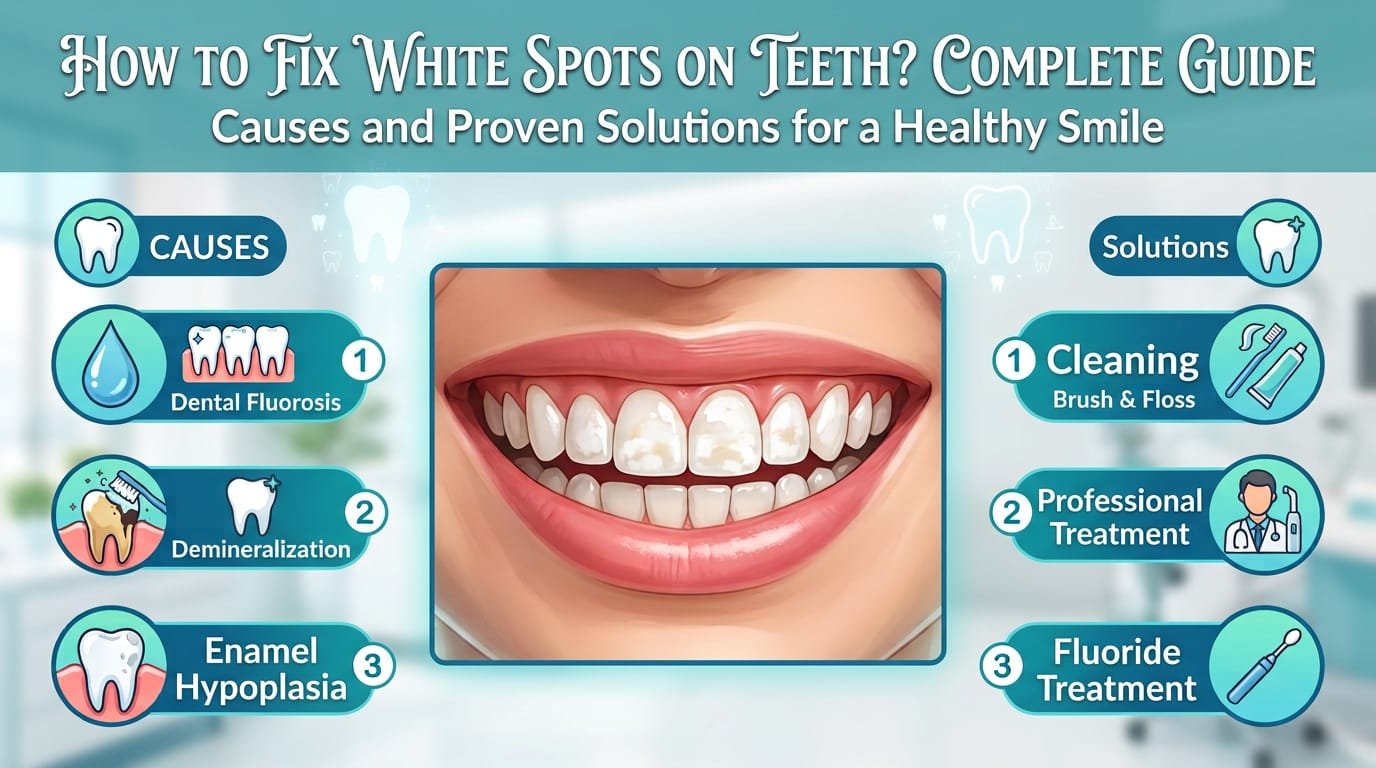
White Spots on Teeth: Causes and Treatment
Introduction
White spots on teeth may mar your smile. These are usually small and white in color and are seen as pale areas on the surface of the teeth. People experience this phenomenon either during their childhood years or later as adults. There may be different factors behind the development of white spots.
However, they might be caused by weak enamel, fluoride, or the early stage of tooth decay. Luckily, there are ways to deal with it. Understanding the cause will help you determine how to care about your teeth.
What Are White Spots on Teeth?
The white spots on teeth are pale in color and do not resemble the rest of the tooth. Such spots can be found on one tooth or several teeth at once. Some of the spots may be smooth while others are rough.
Tooth enamel is the protective outer shell of our teeth. Loss of minerals in tooth enamel leads to the appearance of white spots. Such spots are often an early symptom of tooth decay. Other spots may form while teeth are growing.
What Causes White Spots on the Teeth?
There is no one specific cause for the formation of such stains on the teeth. Understanding what causes white spots on teeth can help you find the right treatment. A dentist will be able to diagnose you and determine the causes. Some possible causes are listed below.
1. Initial Tooth Decay
Plaque is a thin film of bacteria that develops on your teeth. Bacteria get their nutrients from sugars found in food and beverages and produce acids which may remove minerals from the tooth enamel.
With time, this may result in white spots on the teeth. Such signs may precede a cavity and with proper treatment it will be possible to prevent further enamel damage.
2. Fluorosis
Fluorosis occurs when you ingest too much fluoride during the development of your teeth. This condition may manifest as white lines or patches on your teeth.
Children need to use the recommended amount of fluoride toothpaste for their age group and parents should assist them with brushing. Children under six years should be monitored in order to prevent them from swallowing toothpaste.
3. Poor Oral Hygiene
If teeth are not cleaned properly, there will be more plaque that may damage the enamel of the teeth. These will be especially possible around braces, where foods and plaque can accumulate.
Brushing teeth two times per day and flossing are effective preventive measures.
4. Defects in Enamel
Occasionally, enamel development occurs not the proper way. It is associated with the formation of teeth. In such a case, the enamel may appear with white spots or other discolorations.
These problems can originate from childhood. A dentist should examine the quality of the enamel and recommend appropriate treatment.
5. Dry Mouth
Mouth saliva helps maintain oral health and protect the enamel from erosion. If a person has a dry mouth, the enamel can lack the protective effect of the saliva. It will result in tooth decay and appearance of white spots.
It is important to drink enough water and discover the origin of the problem.
Why Are There White Spots on My Teeth?
Why do I have white spots on my teeth? These spots might indicate either early tooth decay, dental fluorosis, or alteration in enamel. In addition, poor oral hygiene could cause such spots. The white spots can be something one was born with.
Evaluate how long you have had the spots and whether they are changing. Never attempt to peel off such spots. Set an appointment with the dentist if you have no idea what caused them.
What are the white spots on my teeth?
The white marks might indicate weak enamel, fluorosis, or simply be a natural discoloration of the tooth. There are those that require no treatment and those that should be treated.
The dentist will be able to examine your teeth and detect any signs of early decay. It is especially important when the spots are relatively new, rough, painful, and growing in size.
White Calcium Spots on Teeth
It usually happens that people call white calcium spots on teeth pale or chalky marks. Such spots might appear when there is demineralization of the enamel.
They do not necessarily mean that your organism has calcium deficiency. They could be associated with plaque, decay, or some alterations of enamel. Taking calcium tablets without advice may not remove the marks. A dentist can help find the cause and suggest the right treatment.
How to Get Rid of White Spots on Teeth?
The appropriate mode of treatment will depend on the underlying cause of the condition. In some instances, treatments work to enhance the appearance of the spots, while other treatments are focused on offering protection for the enamel.
1. Use Fluoride Toothpaste
Use fluoride toothpaste to brush twice daily to help protect your enamel and facilitate the restoration of early mineral loss. Ensure to use a soft brush and brush carefully.
2. Practice Good Oral Hygiene Habits
Use a toothbrush to brush near your gums and floss your teeth often to avoid the formation of plaque. Do not consume foods that may cause the formation of plaque.
Traditional flossing and a Waterpik can help clean between teeth and remove plaque. If you are comparing Waterpik vs flossing, the best option depends on your needs, braces, and personal preference.
3. Use Remineralization Treatment
Some dentists would suggest the use of fluoride or other remineralization products in cases of early enamel marks to regain the lost minerals. Such treatments will not remove all marks on the teeth.
4. Consider Dental Treatments
If the white spots persist, then your dentist may give you some other choices. These could be resin infiltration, enamel microabrasion or dental bonding. The appropriate procedure will depend on the type of the stains or spots.
Never use any strong tooth whitening agents or home remedies before consulting with your dentist. Some of these substances could cause irritation to your mouth or make the issue even worse.
How to Prevent White Spots on Your Teeth?
If you want to know how to get rid of white spots on teeth then certain routines will reduce the chance of having any enamel defects.
- Brush your teeth twice per day using fluoride toothpaste.
- Floss your teeth daily.
- Consume plenty of water.
- Stay away from sweet foods.
- Have regular visits to your dentist.
Follow the instructions from your dentist if you have braces.
- Teach kids the correct way to brush using fluoridated toothpaste.
- Such procedures will help to keep your teeth healthy.
When Should You See a Dentist?
Consult your dentist for any new appearance of white spots or any changes in the color of your teeth. You may also require professional consultation when the white spots start getting rough, spreading, accompanied by pain and sensitivity.
Tooth decay at an early stage may not produce any pain. Visiting a dentist is recommended for finding out whether there is something wrong at an early stage.
Conclusion
White spots in the teeth can be caused by tooth decay, excessive fluoride when the teeth are growing, or other changes in enamel. The proper treatment of white spots in teeth varies depending on their causes.
Proper brushing techniques can prevent you from such problems, but sometimes you still have to visit the dentist.