
Plaque on Teeth: Causes, Effects, and Ways of Removal
Plaque on Teeth: Causes, Effects, and Ways of Removal
Good oral hygiene equals clean teeth. While brushing your teeth daily, a layer of bacteria can accumulate. This layer is called plaque. Plaque is a common problem; however, it is important to pay attention to it since if you leave it untreated, it can bring many troubles to your oral cavity.
Plaque on teeth leads to tooth decay, gum disease, bad breath and different other complications. Yet, getting rid of plaque is not difficult when you know the right way to do it. You can find out what plaque on teeth is, the reasons for its occurrence, its effects on your oral health and ways of removal.Understanding the difference between plaque vs tartar can help you maintain better oral hygiene and prevent common dental problems.
What Is Plaque on Teeth?
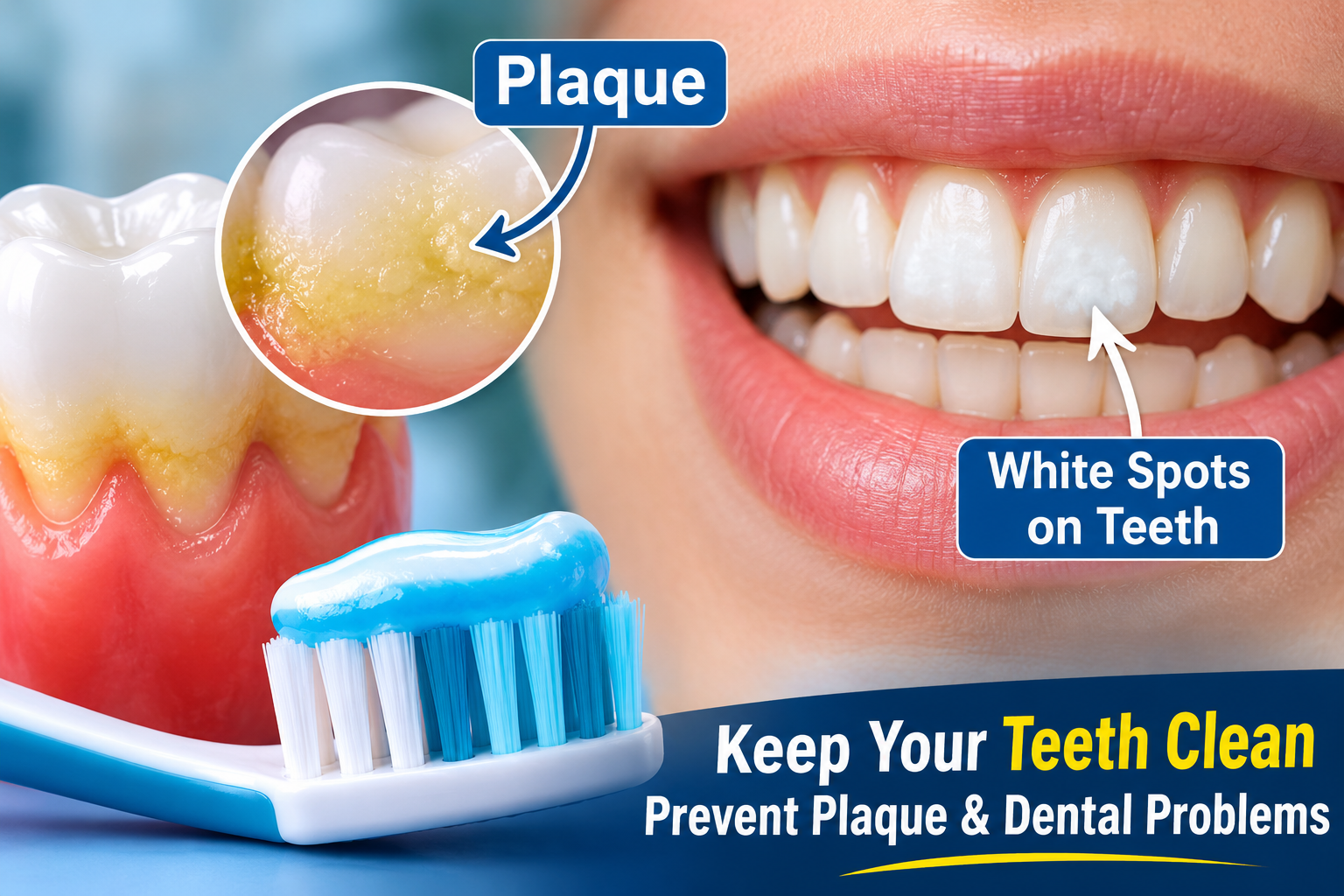
Plaque refers to the bacterial film that covers your teeth and forms on them every day. It appears colorless or pale yellow.It is created through the combination of bacteria found in your mouth with sugars and starches from food.
When you eat, the bacteria use up the sugars in food and create acids. These acids will end up damaging the enamel, which is the outermost layer of your teeth.
Plaques are able to accumulate on the front, sides, and back of your teeth. They may also form in the region of your gums and in between your teeth.
Factors Leading To Formation Of Plaque In Your Mouth
The factors that can lead to plaque accumulation in your mouth include bacteria, saliva, and food.The formation of plaque starts soon after you brush your teeth.
Some of the common causes of plaque formation include:
- Consuming too much sugary food, including candy, cakes, and cookies.
- Consuming beverages like sodas and sweet juices.
- Consuming food that contains high amounts of starch.
- Improper brushing of your teeth.
- Lack of proper flossing every day.
- Sleeping without cleaning your teeth.
- Not going for a dental checkup regularly.
There are various factors that can accelerate the process of plaque formation on your teeth.It is important to clean your teeth every day, even when they look clean.
What Happens If Plaque Is Not Removed?
While plaque might appear harmless, leaving it on your teeth can lead to various dental issues.
1. It Can Become Tartar
As plaque build up on teeth, it will be covered by minerals found in your saliva and harden within 24 to 72 hours. Hardened plaque on the teeth is known as tartar or dental calculus.
Removing hard plaque on teeth with a regular toothbrush is rather challenging. It firmly attaches itself to the tooth surface and can only be removed by the professional during cleaning sessions with a dentist.
2. It Can Lead to Tooth Decay
The bacteria present in plaque feeds off sugars and starch found in foods.When it does this, it creates acid which corrodes the teeth’s enamel.
With time, it causes small holes in your teeth which are called cavities. Untreated cavities can result in infections.
3. It Can Harm Your Gums
The plaque may form along the gum line causing irritation of your gums, swelling, inflammation, and bleeding.
This is a condition referred to as gingivitis, which is one of the earliest stages of periodontal disease. This is because it can develop into periodontal disease which causes tissue and bone loss in the area around your teeth.
What is Gingivitis Plaque on Teeth?
Gingivitis plaque on teeth is an inflammatory formation of plaque which irritates the gums. It is among the first symptoms of gum diseases.
Some of its symptoms include:
- Gums bleeding and being sensitive
- Bad breath
- Inflammation of the gums
- Darkening gums
- Treatment for Plaque on Teeth with Gingivitis
This dental problem can be treated using proper dental care and cleaning. However, when you have swelling and bleeding gums, you need to see your dentist.
How to Get Rid of Plaque on Teeth
If you want to know how to get rid of plaque on teeth through dental hygiene. The important thing is to clean your teeth thoroughly.
Follow these simple tips.
- Brush Your Teeth at Least Two Times a Day
- Brush your teeth twice a day for two minutes. You need a soft toothbrush and fluoride toothpaste. Fluoride acts as protection against tooth decay.
- Scrub the fronts, backs, and chewing surfaces of the teeth.
- Be sure to use gentle and circular movements.
- Do not brush too hard because it might irritate your gums.
Floss Every Day
There will be some places in between your teeth that cannot be reached by the toothbrush. Plaque and food can get stuck in those spaces.
Flossing is necessary on a daily basis so that you can remove dirt from the places in between your teeth. It is possible to make use of small brushes that can be placed between the teeth.
Use an Antibacterial Mouthwash
An antibacterial mouthwash can help reduce the number of bacteria in your mouth. There are many mouthwashes available that help control the plaque.
Go for a mouthwash that helps you control the amount of plaque. Follow the instructions on the label of the product. Keep in mind that the mouthwash should not take the place of brushing and flossing.
Brush Your Tongue
It is important to brush your tongue since the bacteria accumulate there as well. They can lead to foul smell.
The best way is to use a tongue cleaner or a toothbrush to clean your tongue on a daily basis.
Go to See the Dentist
You should go see the dentist after some time. Many individuals require dental checkups every six months but your dentist will advise you when to come.
How to Prevent Plaque Buildup
Prevention is always easier and cheaper than treatment when it comes to dental problems. A few small things you do daily may ensure proper oral hygiene and prevention of plaque buildup on teeth.
Here is what to do:
- Brush your teeth each morning and before going to bed.
- Use fluoride toothpaste.
- Floss between teeth daily.
- Drinking water is essential.
- Eating fresh fruits and vegetables.
- Minimize consumption of sugar products.
- Avoid having sticky food too often.
- Visit a dentist regularly.
And, you should avoid smoking and using tobacco products. They are harmful to gums and the general condition of the mouth.
Can You Remove Tartar at Home?
No. You can clean soft plaque by brushing and flossing, but hard tartar is not the same thing. It adheres to your teeth firmly, and only professional tools will help to get rid of it.
- Do not use any sharp object to scrape it. You risk damaging your enamel or gum.
- A dentist removes tartar by scaling. This procedure requires professional equipment. Your teeth will be polished after that.
When Should You See a Dentist?
Visit a dentist if you show symptoms of tooth decay. Do not delay until the pain becomes unbearable.
You need to make a dental appointment if:
- You have bleeding gums.
- Swollen or red gums.
- Persistent bad breath.
- Your teeth have yellow or hard coatings.
- Pain in your teeth.
- Discomfort while eating.
- Your gums seem to pull away from your teeth.
Such early treatment will help you avoid further dental problems.
Conclusion
Plaque on teeth is a very common phenomenon among people of all age groups. Plaque is formed every day due to a combination of bacteria and other elements in the mouth like food and sugar. Failure to remove plaque can result in formation of tartar, cavities, and gum disease.
The most effective way of dealing with plaque is by brushing your teeth at least two times a day, flossing and visiting your dentist regularly for cleaning.