
Plaque Vs Tartar – Causes, Differences and Treatment
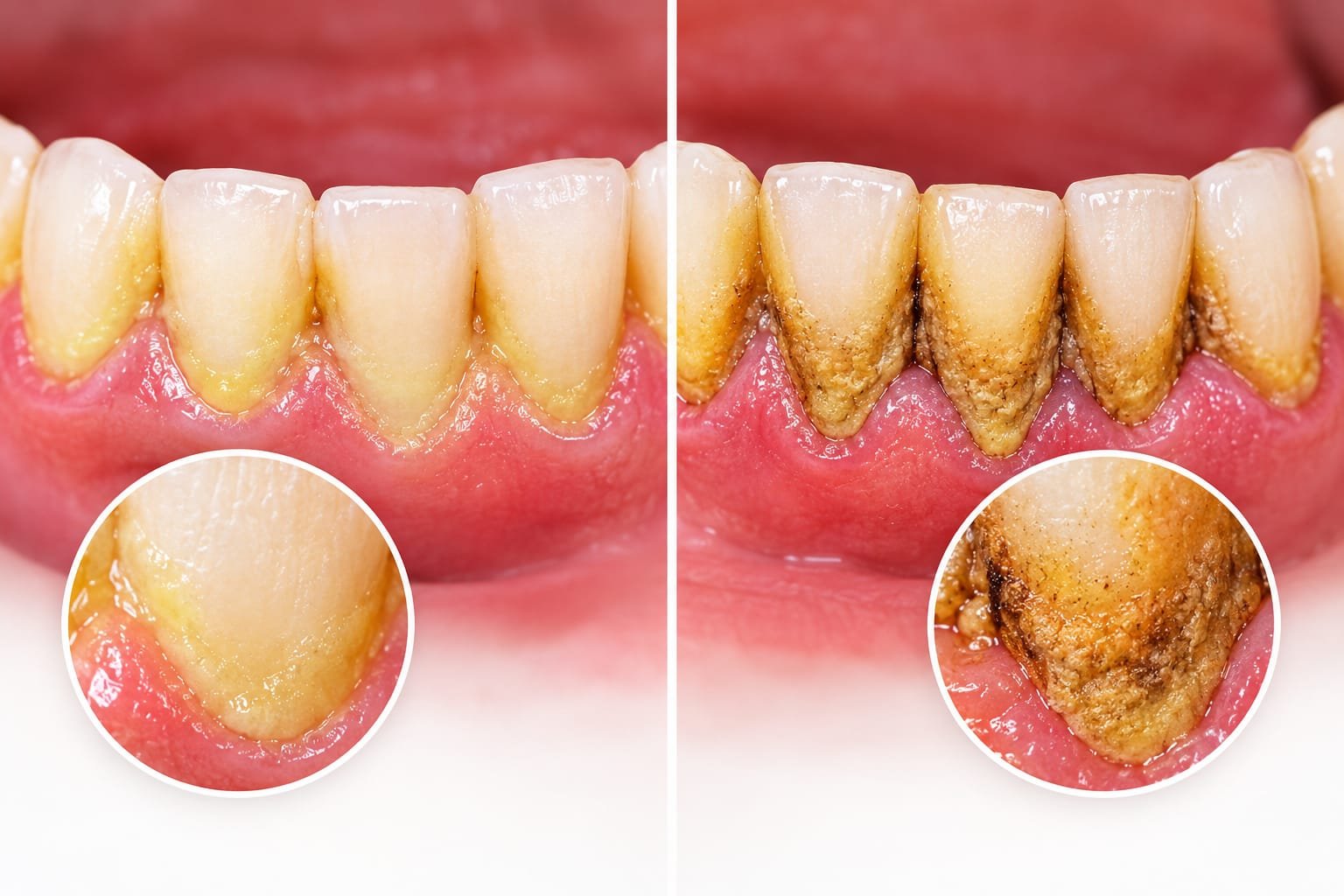
Plaque vs Tartar – Causes and Treatment Methods
Introduction
Proper oral care will ensure you have clean and healthy teeth. There are however two issues that may affect the condition of your teeth and mouth in general. These include plaque and tartar. The two seem very similar but they are different. Neglecting the two can be harmful to the health of your teeth.
Understanding plaque vs tartar on teeth can help you protect your smile. Plaque is a soft layer of bacteria that forms on your teeth every day. Tartar develops when plaque hardens and stays on your teeth. Poor oral hygiene can also contribute to white spots on teeth, which may be an early sign of tooth decay or other dental issues.
What Is a Dental Plaque?
Plaque is a soft and sticky substance that develops on your teeth daily. Plaque has bacteria present in the mouth. Bacteria in plaque use sugars from the food and beverages to generate acids that can damage your tooth enamel.
The substance is normally colorless or pale yellow, making it invisible in the mirror. The feeling of fuzziness on your teeth by running your tongue on them could be caused by plaque.
Plaque accumulation takes place after meals. Inadequate oral hygiene may allow the buildup of plaque. Accumulation of plaque can result in different problems, such as:
- Tooth decay and cavities.
- Gum inflammation and redness.
- Bleeding of gums while brushing.
- Bad breath
Luckily, you can clean plaque through daily brushing and flossing.
What Is Dental Tartar?
Dental tartar is referred to as dental calculus. Tartar results from the buildup of plaque that eventually becomes hard. Saliva contains minerals that help solidify plaque. The process can take only a few days.
Unlike plaque, tartar is neither soft nor easy to get rid of. Its texture is rough; that is why it is noticeable when you run your tongue along your teeth. Its color may vary between yellow, brown, or dark, close to the gums.
The tartar is usually formed in those places where mineral deposits can gather. The most common places for it to appear are behind the lower front teeth and upper back ones.
The potential health issues caused by tartar include:
- Gum inflammation and redness
- Halitosis
- Gum recession;
- Increased risk of developing periodontitis;
Moreover, the accumulation of tartar creates conditions for additional bacteria colonization as its surface is rough. The only way to safely remove the tartar is to use special techniques by the dentists and dental hygienists.
Plaque and Tartar on Teeth: Major Differences
Both plaque and tartar have a negative impact on your oral health. But there are some distinctions between these two elements which affect their formation, texture, and removal.If you want to understand what is plaque vs tartar, the main difference is that plaque is soft, while tartar is hardened plaque.
They are as follows:
- Texture – plaque is sticky, while tartar is hard;
- Color – plaque is usually white or pale-yellow. Tartar may be yellow, brown, or dark in color;
- Formation – plaque appears on a daily basis.
- Removal: You can remove plaque at home. Tartar needs professional cleaning.
- Health risks: Plaque can cause cavities and gum irritation. Tartar can trap more bacteria and increase the risk of gum disease.
When comparing what is tartar vs plaque, remember that both need attention to protect your teeth and gums.
What Are the Causes of Plaque and Tartar Buildup?
There is no way to prevent the formation of plaque. It forms naturally in your mouth. But there are some factors that can cause it to accumulate faster.
The most common ones are:
- Lack of daily brushing.
- Failure to floss between your teeth.
- Consumption of food high in sugar content.
- High consumption of sugary drinks.
- Neglecting dental checkups.
- Failure to clean all areas of your mouth.
As a result of staying on your teeth, the plaque turns into tartar. Therefore, the importance of daily oral hygiene cannot be underestimated. Removal of plaque is an important step that prevents the accumulation of tartar.
How to Prevent Plaque and Tartar
Simple everyday practices could minimize the possibility of tartar vs plaque. There is no need for complicated hygiene procedures. Small improvements could bring significant results.
Here are some recommendations:
- Brush your teeth two times per day using fluoridated toothpaste.
- Use dental floss daily regardless of the fact that you have clean teeth.
- Reduce the amount of sugar-containing products in your diet.
- Eat healthy products: fruit, vegetables, etc.
- Do not smoke or use tobacco products.
- Visit a dentist regularly for checkup and cleaning.
Your dentist could recommend you a specific period of visiting depending on your oral condition.
When is it Time to Visit a Dentist If You Have Plaque vs Tartar?
Plaque is removable with your efforts, and tartar requires professional cleaning.
Visit a dentist in case of visible hard deposits, bleeding during brushing, swollen and painful gums or persistent bad smell from the mouth. Painful gums pulling away from your teeth is another signal that you have to visit a dentist.
Conclusion
Plaque and tartar are two oral problems that many people face, but the two have differences. Plaque is a film of bacteria that accumulates on your teeth daily. Tartar, on the other hand, is formed by hardened plaque that sticks to your teeth.
Knowing about the difference between plaque vs tartar will enable you to make good choices about your oral hygiene. Brushing twice a day, flossing once a day, and avoiding too many sugary foods is key. Visiting the dentist is another way to ensure your oral hygiene.