
Can Receding Gums Grow Back? Causes and Treatment
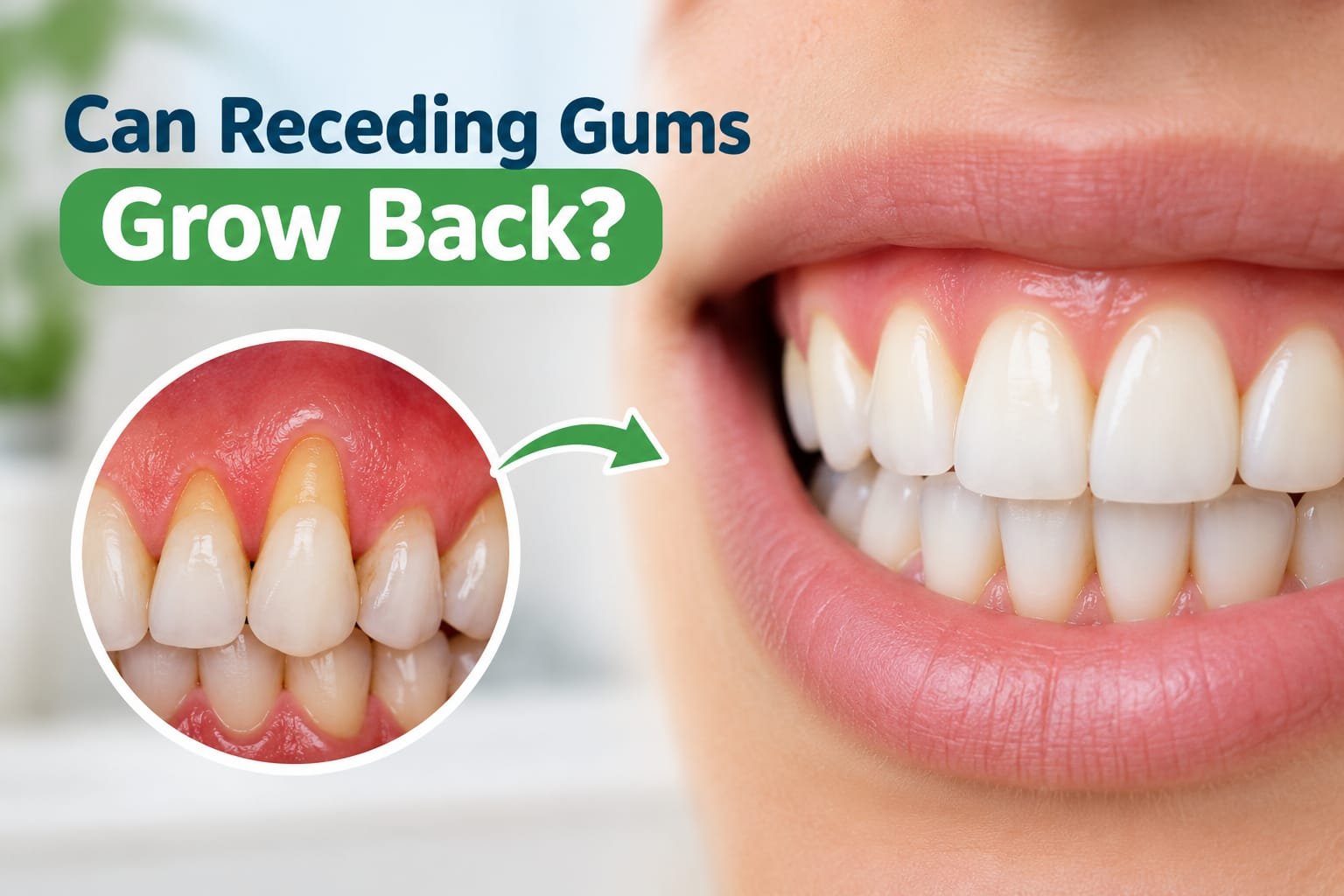
Can Receding Gums Grow Back? Causes and Treatment Options
Introduction
Do your teeth appear to be longer than usual? Are you able to see more teeth close to the gumline? These are all symptoms of gum recession, where the gums pull away from the teeth and reveal the roots.
Many people wonder, can receding gums grow back? Unfortunately, no lost gum tissue cannot regenerate without treatment. It's impossible to restore the lost gum tissue using home remedies as well. But regular dental hygiene can stop the process of gum recession.
Here, you will find out what can cause gum recession, how to prevent it and which procedures can help to cover exposed roots of your teeth.
Can Receding Gums Grow Back Naturally?
No, receding gums cannot regrow after gum tissue is lost in the process. There is no way for the body to generate new gum tissue.
As gums start to pull away from the teeth, roots may start to appear. It makes your teeth look larger and also causes pain during chewing hot, cold, and sweet things. Plaque vs tartar is also important to understand because both can affect gum health.
Even though it is not possible for the lost tissue to regrow, you should still try to protect your current gum line. Taking proper care of your teeth will help you maintain the health of your gum.
Visit a dentist if you see any signs of gumline recession. It is better to act early and avoid problems in the future.
Can Gums Grow Back After Receding?
People often ask themselves, can gums grow back after receding? Whether it is possible or not depends on what people understand by "grow back".
Gum tissue is not regrown naturally. But dentists have special procedures that could cover the roots of your teeth.
What Causes Receding Gums?
There are several factors that may contribute to your gums pulling back from the teeth. Understanding them will enable you to prevent such problems from happening.
1. Excessive Brushing
Excessive brushing of your teeth will hurt your gums. In addition, using a toothbrush with hard bristles may also harm your gum tissues.
Use a toothbrush with soft bristles and move gently when brushing your teeth.
2. Gum Disease
Gum disease is another factor that may contribute to your receding gums. Plaque is a layer of bacteria that forms on your teeth. Not removing plaque from your teeth will cause it to form hard tartar.
This may result in swollen, red, or even bleeding gums. Severe gum disease can lead to damage of supporting tissues and bones.
3. Lack of Good Oral Hygiene
Lack of good oral hygiene allows plaque formation in your mouth and leads to the development of gum disease.
Brush your teeth twice a day and clean them properly.
4. Teeth Grinding
Tooth grinding is known to add some extra pressure on teeth. It might lead to some other dental complications and aggravate some gum-related concerns.
A dentist can determine whether you grind your teeth and give you some protection options.
Can Receding Gums Heal On Their Own With Home Remedies?
Home treatments for gums are numerous; however, they cannot replace lost gum tissues.
Rinsing with salt water will help to decrease the inflammation of gums. Right tooth brushing and flossing will reduce the formation of dental plaque but will not stop the receding.
Oil pulling and herbal medicine cannot be used for treatment of missing gums because they are not scientifically proven.
Exercise caution and avoid using any irritants that may harm your gums. In case there are symptoms such as pain, bleeding, inflammation, and separation from teeth, visit your dentist.
How Do Dentists Treat Receding Gums?
Even though it is impossible to regrow gums on your own, a dentist is able to provide you with several treatment options.
1. Scaling and Root Planing
Scaling and root planing is a type of deep cleaning where your dentist will remove tartar and plaque underneath the gum line and clean the roots of your teeth.
This treatment will help control the progression of gum disease and help maintain gum health. Nonetheless, it will not replace any missing gum tissue.
2. Gum Grafting
Gum grafting is a surgical treatment procedure that is used in case of receding gums. Your dentist takes a piece of tissue from the roof of the mouth or uses donor tissue.
This tissue is attached to the exposed tooth root to cover it up. You should consult your dentist whether it is suitable for your specific situation.
3. Pinhole Surgical Technique
The pinhole surgical procedure is also another option for gum recession. The dentist cuts a small incision in the gum tissue and carefully slides the present tissue onto the exposed roots.
This procedure does not involve taking tissue from the roof of your mouth. However, this technique cannot be used in all cases of gum recession.
4. Desensitizing Procedures
Gum recession might cause your sensitive roots to become exposed to the air. This could lead to pain upon eating and drinking food that is hot or cold.
Your dentist can recommend fluoride treatment or a toothpaste desensitizer. They will not solve the problem, but they will ease your discomfort.
How to Prevent Further Gum Recession?
Although there is nothing you can do about the loss of gum tissue at home, there are things you can do to protect your gums.
- Brush your teeth twice a day with a soft bristle brush.
- Brush your teeth gently.
- Floss or interdental cleaning daily.
- Go to the dentist for routine check-ups and cleaning.
- Do not smoke or use tobacco products.
- Try to treat gum disease at the earliest stage.
- Visit a dentist if you grind your teeth.
Never ignore blood, swelling or any change on the line of the gum.
Such practices will help minimize the chances of having gum damage in future.
When Do You Need to Visit a Dentist?
If your gums are pulling away from the teeth, you need to see a dentist. Some other indications could be the following: swollen, bleeding gums; bad breath; sensitive teeth; and long-looking teeth.
Loose teeth or changes in your bite should make you consult a dentist as soon as possible. Early dental treatment will help save the tissues and bone supporting your teeth.
Conclusion
So, can receding gums grow back?No, lost gum tissue does not grow back naturally or through home remedies. But you still have an opportunity to save your healthy gums by maintaining proper oral hygiene.
There are several procedures that can assist in controlling the problem of gum recession, such as scaling and root planning or gum grafting. Another option could be used for decreasing tooth sensitivity and protecting the roots of teeth.
If you suspect that your gums are receding, don’t hesitate to visit your dentist and find the reason.