
Why Is My Nose So Oily? Causes and Tips
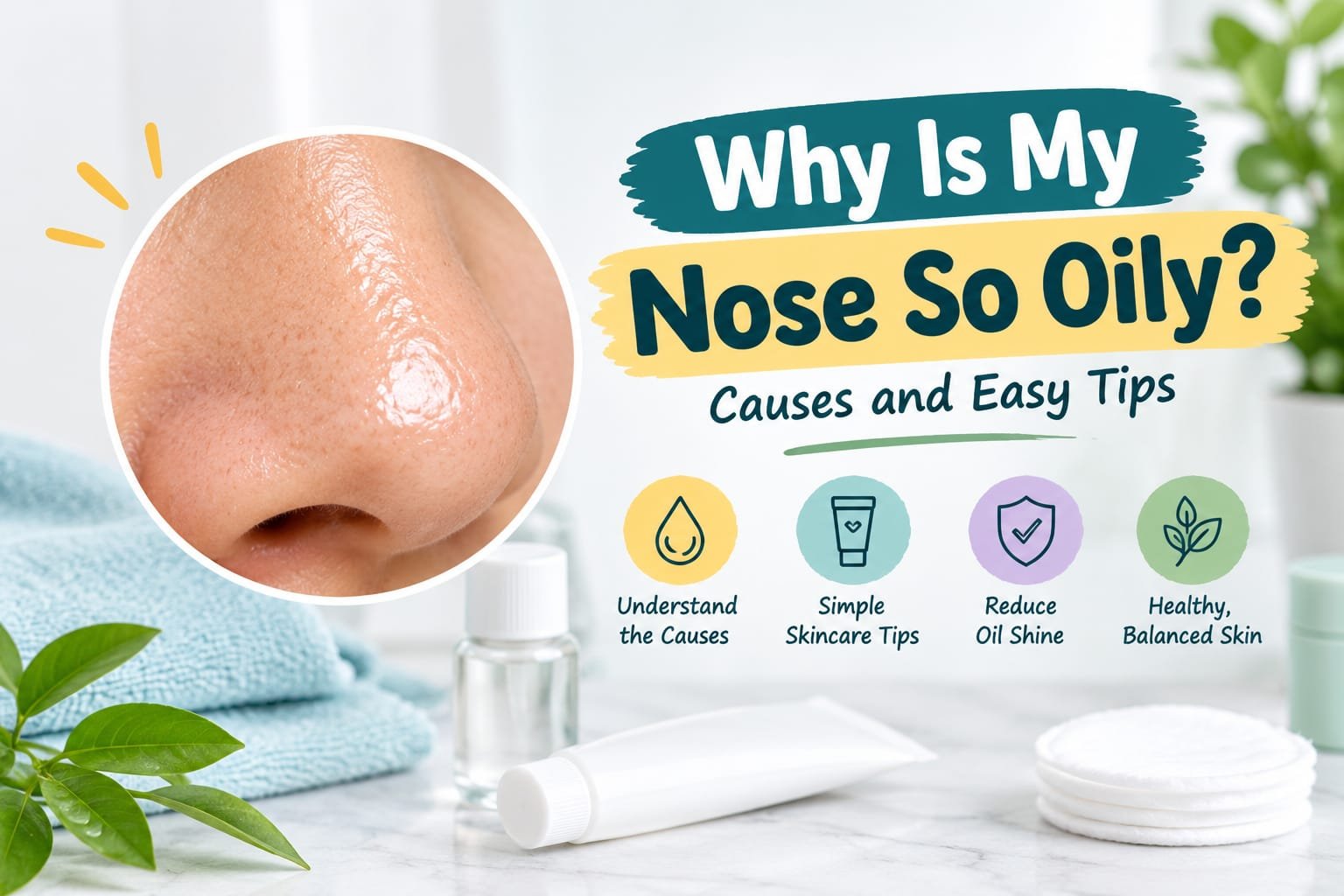
Why Is My Nose So Oily? Causes and Easy Solutions
Introduction
Have you ever noticed extra grease in your nose area? Do you see your nose covered with oil even after face wash? You are not the only one who suffers from an oily nose when other parts of your face are fine.
Your nose contains many glands which produce natural skin oil called sebum. This oil protects your skin and makes it soft. At the same time, excessive sebum production can make your nose greasy. Moreover, sebum mixes with dead cells and clogs your pores.
If you ask yourself “why is my nose so oily”, there are several reasons for this problem. Hormones, genetics, climate, and skincare habits are just a few of them. There is a bright side because simple steps can solve the problem of extra oil.
Why Is My Nose So Oily?
The nose belongs to the T-zone. The T-zone consists of the forehead, nose, and chin. It usually produces more sebum compared to other facial areas.
Your sebaceous glands secrete sebum through your pores. Sebum serves as a protective oil barrier for your skin. When your glands produce excessive amounts of this oil, your nose appears oily.A damaged skin barrier can also affect your skin’s balance and lead to changes in oil production.
Oily skin can be caused by your genetics. Other people start producing more sebum in puberty, hot weather conditions, or hormonal changes. The use of rough skincare products may irritate and dry out your skin.
Identification of the cause will help you determine appropriate skincare products and practices.
Common Causes of Oily Nose
There are several oily nose causes. Knowing them will help you deal with excess oil.
1. Oil Production
There are many sebaceous glands in your nose. They secrete sebum in order to protect your skin. When the glands produce too much sebum, your nose starts shining.
2. Genetics
Your genetic predisposition can affect the amount of oil that your body produces. In case oily skin is typical for your family, chances are high that you also have an oily nose. You cannot change your genes, but you can manage an excess oily nose skincare routine.
3. Hormonal Changes
Oiliness can result from hormone secretion. The hormones can affect you when you go through puberty stages or at your menstrual period, among others. At times stress can also cause your skin to be oily.
4. Warmth and Humidity
Heat and humidity can cause your skin to produce excess oil. You might notice this especially during summer. Sweat will also combine with oil, making your nose look greasy.
5. Harsh Skincare Products
Harsh soaps and face washing can strip your skin of its oils. They leave your skin feeling dry and irritated. In response to this, some people will opt for more skincare products to deal with the problem.
6. Lack of Moisturizer
Even oily skin requires moisturizing. When you neglect using the moisturizer, it causes dryness and dehydration of your skin. Proper moisturizer helps keep your skin barrier and comfortable.
How to Get Rid of Oily Nose?
For those interested in how to treat an oily nose, try following simple skincare practices first. There is no need for expensive treatments in order to take care of skin concerns.
1. Gently Cleanse Your Face
Cleanse your face twice a day with a mild face wash. Do not opt for harsh soap or scrub.
Do not cleanse your face multiple times to get rid of oil. This can be damaging for your face. Dry your skin with a clean towel afterwards.
2. Use Salicylic Acid
Salicylic acid is a skincare agent that can exfoliate your skin and prevent pore blockage. This may help get rid of excess oil and prevent blackheads.
Begin by using a product with low concentration of salicylic acid and follow the instructions on the packaging. Do not use it if the skin becomes irritated by the product. Be careful not to combine multiple strong products.
3.Use Sunscreen Every Day
Sun protection is important in every skin type. Choose a broad-spectrum sunscreen that has an SPF of 30 or more. A lightweight formula would work well on oily skin. Apply it as per instructions, especially after you have sweat or been exposed to sunlight.
How to Reduce Oil Shine of Your Nose Through the Day?
Knowing how to reduce oily nose will help your skin look fresh throughout the day.
Here are some things that you may want to try:
- Oil-blotting sheets for reducing the extra shine.
- Do not touch your nose with your fingers.
- Choose non-comedogenic makeup products.
- Wash off your makeup before sleeping.
- Clean your phone screen regularly.
- Avoid heavy formulations that feel greasy on your skin.
Oil-blotting sheets can help you get rid of excess shine without applying a new face wash. Apply one on your nose gently. Do not rub it on your skin.
How to Stop Oily Nose Shine Using a Regular Routine
It is impossible to stop the skin from producing oil at all times. Nonetheless, you can deal with the excess shine using an oily nose routine.
Morning Routine
Start by cleansing your face using a gentle cleanser. Apply a lightweight moisturizer. If you wear makeup, choose products that suit oily skin. Avoid applying too many layers, as they may feel heavy.
Night Routine
Take off your make-up and sun block before sleeping. Use a gentle cleanser for washing your face. Moisturize your skin.
You may use salicylic acid in your routine, if your skin requires assistance in getting rid of blocked pores. Start gradually by following the directions of the product.
Consistency is better than using a number of products. Your routine will take time to prove effective.
Mistakes to Avoid when Managing an Oily Nose
Some behaviors can make it hard to manage oily skin. Here are the mistakes you should avoid:
- Washing your face too often.
- Using alcohol-based products that cause dryness.
- Scrubbing your nose roughly.
- Squeezing blackheads or pimples.
- Skipping moisturizer because your skin is oily.
- Using several strong active ingredients together.
These cause irritation and damage your skin barrier. A simple routine is often easier to follow and maintain.
When Should You See a Dermatologist?
Oily noses are common. However, in case you have continuous acne, painful pimples, severe redness, and irritation of the skin, you may need to seek expert advice.
Dermatologist will examine your skin condition and recommend appropriate treatment methods. In particular, if OTC medications fail to help you.
Do not forget that oily skin is not dirty. It is simply a skin type that should be properly taken care of.
Conclusion
When you keep wondering why my nose so oily all the time, your genes, hormones, weather, and personal skincare might be the reason behind it. Nose contains a great amount of sebaceous glands, so some oiling is normal.
You can control excessive oily condition through proper facial cleansing, the use of light cream and sun protection, and the application of non-greasy products. Salicylic acid can be also beneficial for your skin if your pores get clogged.
Just follow a daily basic skincare regimen and be patient with your skin.