
Four Hair Growth Phases: A Complete Guide to Healthy Hair
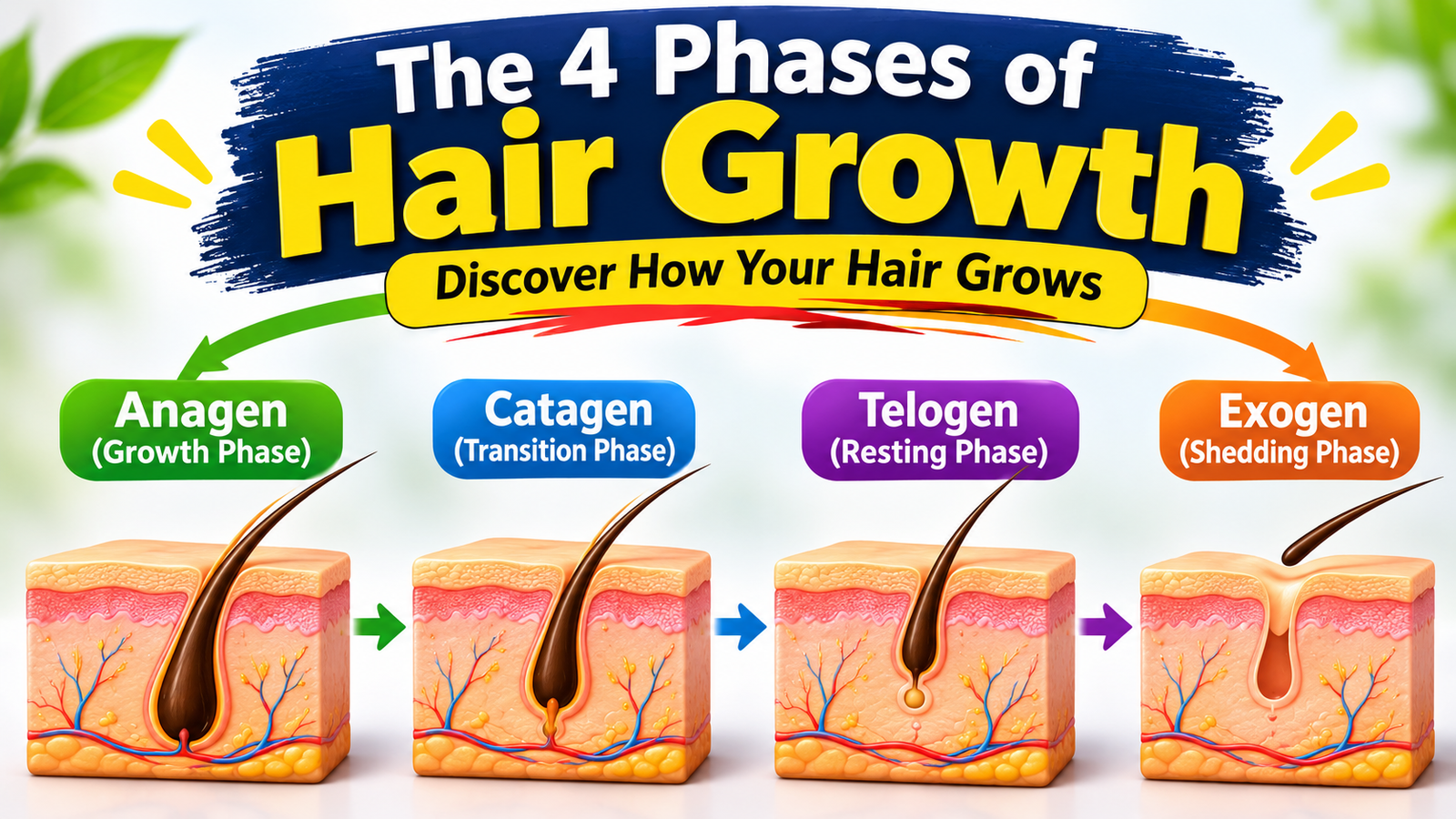
Hair Growth Phases: Understanding the 4 Stages of Hair Growth
Are you curious about the reasons for hair growth phases, resting, and falling off? That is why there is a particular cycle of hair development which affects every hair strand on your head. There are several hair growth stages and they contribute to the process of hair development and shedding.
Hair growth cycles will help you understand the peculiarities of your hair condition better. It is also a good way to figure out the reasons behind hair loss and hair thinning. Some people experience fast hair growth while other individuals have slower hair growth. Taking care of your hair during every growth stage is important, and using a suitable hair mask for dry hair can help keep your hair soft, smooth, and manageable.
In this article, you will learn about the four hair growth phases, how they work, and what can affect them.
What Are the Hair Growth Phases?
Hair grows neither continuously nor at the same rate all the time. Each hair is grown in a tiny hole on the surface of the skin which is called a hair follicle. The hair follicle manages the growth of the hair strands.
There are four major phases that characterize hair growth which are described below:
- Anagen: active growth phase
- Catagen: transitional phase
- Telogen: resting phase
- Exogen: shedding phase
Each of these phases plays a different role. Some help the hair to grow longer whereas some help to remove old hair for new hair growth. These phases of hair growth repeat continuously during your entire lifetime.
1. Anagen Phase: Active Growth Phase
Anagen phase is the first and longest phase of hair growth in which hair grows from the hair roots. Cells within the hair bulb divide very quickly and facilitate the formation of new hair.
Approximately 85 to 90 percent of scalp hairs are in this phase. This phase continues for 2 to 7 years. It lasts for more than two decades for some people. During this phase, the hair grows one centimeter every month.
A healthy diet and good hair care can support normal hair growth. However, genetics also play an important role in how long this stage lasts.
2. Catagen Phase: The Transition Stage
The catagen phase is the second phase of the hair growth cycle. Catagen phase is a very brief stage between anagena and telogen stages.
During this stage, hair stops growing. Hair follicle shrinks as hair separates from its lower section; however, it remains in the scalp for a while.
The catagen stage lasts about two weeks and only 1% to 3% of hair on the scalp enters this phase.
Catagen phase allows the hair follicle to prepare for the next phase – resting phase. This is a normal stage of the healthy hair growth process.
3. Telogen Phase: The Resting Phase
Telogen phase is the third stage in the hair growth cycle. At this stage, the hair follicle is resting. The old hair remains in the follicle but no hair growth occurs.
Meanwhile, new hair starts forming below the old one. This allows the hair follicle to get ready for the next growing cycle.
The telogen phase takes place over a period of two to three months and comprises 9% of hair on the head.
Some individuals could find more shedding hair while shampooing or brushing their hair during this time.
4. Exogen Phase: The Shedding Stage
The exogen phase marks the last phase of the hair growth cycle. In the exogen phase, old hairs shed from the scalp. A new hair replaces the shed one.
Brushing, washing, and touching your hair helps you lose loose hairs. It is normal for a person to shed between 50 to 100 hairs daily.
The exogen phase may last for several months as a part of the hair growth cycle process. You should not be worried about shedding every loose hair. Sometimes hair shedding needs attention.
Hair Growth Cycle
It is common for people to talk of the hair growth cycle phases anagen, catagen, telogen. They refer to the growth, transition, and resting phases respectively.
Exogen phase is equally important since it explains how the old hairs fall. The four phases of the hair growth process include these.
Hair growth cycle phases do not occur at once for all hairs. Some hair strands are growing while some others are in the resting or shedding phase. This is why you do not lose all your hair at once.
You may also hear about the three phases of hair growth. This is a common way to describe the anagen, catagen, and telogen stages. Exogen is sometimes explained separately.
What Factors Can Affect the Hair Growth Cycle?
There are various aspects that may influence the normal hair growth process. Certain aspects may even lead to premature hair loss.
1. Stress
Stress in any form influences hair adversely. This is because stress causes the hair follicles to go into the resting and shedding stage prematurely. This condition is known as Telogen Effluvium, and it causes excessive hair loss.
2. Nutritional Issues
In order to have healthy hair, it is important to consume enough nutrients. The deficiency of iron, protein, vitamin B12, and other vitamins can negatively affect hair growth. A balanced diet will positively affect both hair and general health.
3. Hormones
Apart from vitamins and minerals, hormones are responsible for hair growth as well. Dihydrotestosterone or DHT can affect hair follicles of people with a family predisposition to hair loss. This hormone can make hair follicles smaller and reduce the active phase.
4. Thyroid Problems
It is known that the thyroid gland regulates many processes in our body. If its functioning is disturbed, it can affect hair growth as well.
How Can You Support Healthy Hair Growth?
However, one cannot control everything about their hair growth cycle. Some basic practices will ensure that you have healthy hair.
- Eat proteins, vitamins, and minerals.
- Drink plenty of water.
- Use a gentle shampoo on your scalp.
- Do not pull your hair too much.
- Have sufficient sleep every day.
- Manage the stress of daily life by using simple methods.
If you notice abnormal hair fall, see a doctor. Remember that hair growth takes time. There is no magic oil or shampoo that allows you to grow your hair instantly.
When Should You Be Concerned About Your Hair Falling Out?
Hair shedding is natural. It is a process that happens during the hair growth cycle. But you need to worry if you notice a quick shedding of your hair, a patchiness, an increased width of your hair part, or extremely thin hair in a ponytail.
These factors can appear because of various reasons, including stress or any disease. A doctor or dermatologist can help identify the problem and give recommendations.
Conclusion
The hair growth phases are an important part of healthy hair.These consist of four phases: anagen, catagen, telogen, and exogen. Each of these phases plays a role in growing your hair, giving them enough rest, and losing it in a natural way.
Different factors such as stress, bad nutrition, hormones, or thyroid issues may influence this process. Proper nutrition, scalp care, and hygiene can contribute to hair health.