
Functional vs Traditional Strength Training: Key Differences You Should Know
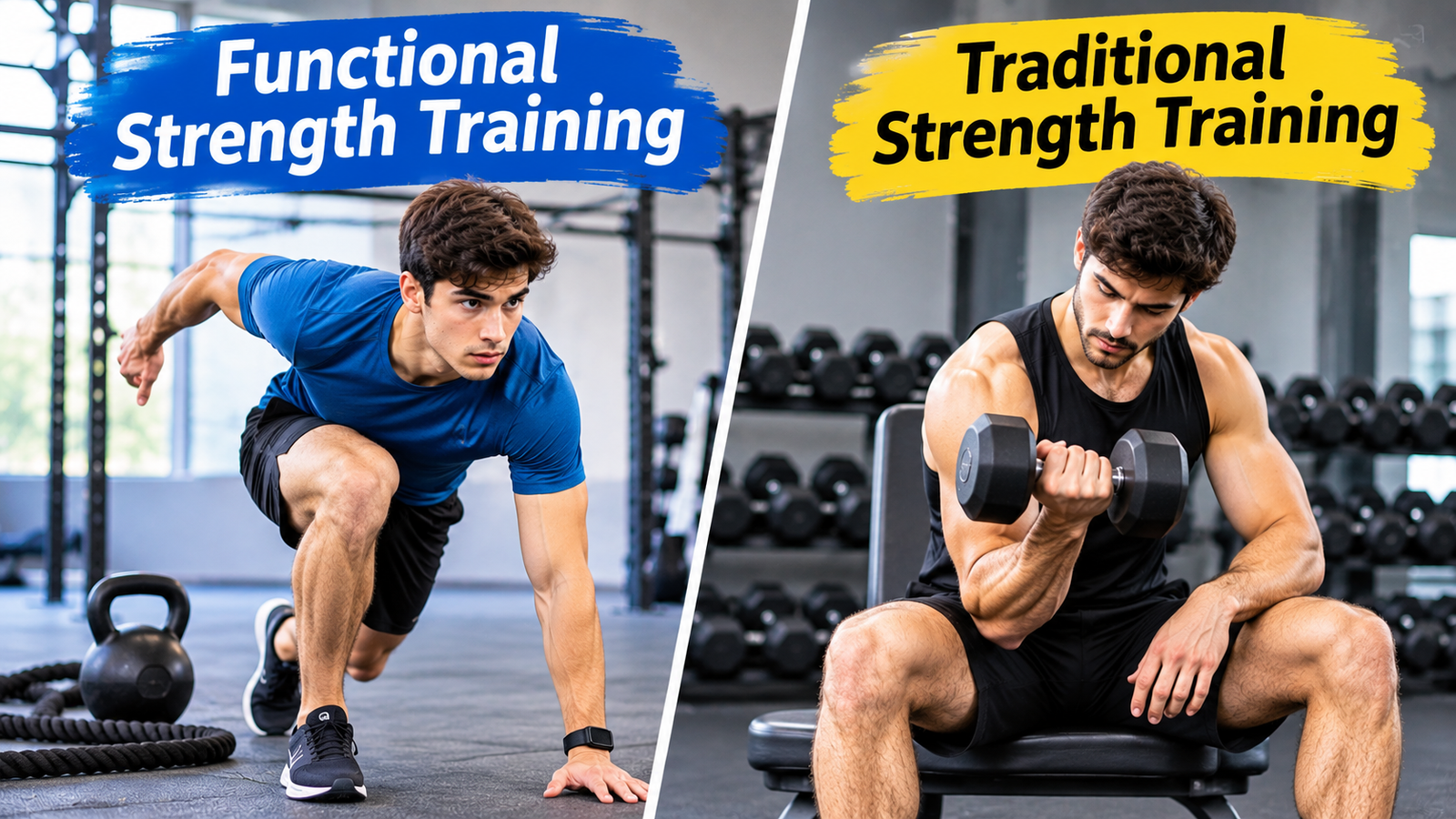
Functional vs Traditional Strength Training – Which One to Choose?
Strength training is a great way to build up your body and make it stronger and balanced.But all strength training exercises are not the same. There are those that will give you bulkier muscles and those that will make you more effective in real-life activities.
This is where the comparison of functional and traditional strength training comes into play. Each of them is beneficial for the growth of your strength, though each of them has peculiarities regarding exercises and programs of strength training. Let's review them in this guide. Following a regular home workout routine can also help improve muscle strength, balance, and overall fitness.
What Is Traditional Strength Training?
Strength training usually involves development of muscle mass and strength. This is achieved through exercises which target one muscle group at once. Weight or gym equipment can be used to work on various parts of the body.
For instance, one can use weights to develop the arms while using gym equipment to work on legs. The exercises in strength training are performed in a controlled manner.
Examples of common exercises in strength training are:
- Bicep curls
- Bench presses
- Leg extensions
- Dumbbell shoulder presses
- Machine-assisted squats
This method of training is ideal for people who want larger muscles and stronger lifting power. This form of training is favored by bodybuilders and people interested in weightlifting.
What Is Functional Strength Training?
Functional strength training assists the body to move in a more efficient way. It involves training exercises which are natural movements and are done on a regular basis such as walking, bending, lifting, and reaching.
The exercises in functional strength training involve several muscles at once unlike strength training.
Some common functional strength training exercises are:
- Push-ups
- Lunges
- Jump squats
- Farmer's carries
- Bodyweight squats
- Rotational twists
You can do many of these exercises at home or in a gym. You may use your body weight, resistance bands, kettlebells, or medicine balls.
Functional training is useful for those people who wish to perform better and become more active in everyday movements.
Functional vs. Conventional Strength Training – Basic Differences
Both of these will make you stronger; the only difference is in the methods used for getting the desired results. Understanding the main differences between these kinds of exercises will assist you in making your choice.
1. Main Objectives of Training
The primary goal of traditional strength training is to promote muscle growth and increase the load.
Functional strength training aims at improving movement quality and the ability of your body to control itself.
2. Type of Movements
In traditional training, you will have to perform simple and controlled movements targeting specific muscles or groups of muscles.
In functional training, the movements will be more complex and resemble those that people make in everyday life. Several muscles will work simultaneously during the exercise.
3. Equipment
For the traditional strength training, you will need barbells, dumbbells, cable machines, and various gym equipment.
In functional training, kettlebells, resistance bands, medicine balls, stability balls, and body weight exercises can be used.
Expensive equipment is not always needed for functional workouts because many exercises can be done at home.
4. Muscles Used During Exercise
The conventional method of training usually concentrates on one muscle group at a time. For instance, doing bicep curls exercises works on the muscles in your upper arms.
Functional strength training involves the use of multiple muscles. The squats exercise, for instance, targets your leg, hip, and core muscles.
It helps your body work together in different movements.
Benefits of Traditional Strength Training
Traditional strength training provides various benefits to your body. It is ideal for individuals who wish to develop muscle mass and boost their lifting abilities.
Some of the notable benefits of traditional strength training include:
- Development of stronger and larger muscles.
- Helps in boosting lifting ability.
- Improves bone density.
- Facilitates the training of particular muscle groups.
- Makes it easy to track strength improvement.
- Helps in improving body physique and size of muscles.
Regular workouts allow you to progressively add more weights hence the development of muscle strength.
Benefits of Functional Strength Training
Functional strength training has advantages that may assist you in your daily activities. It prepares your body for movements and physical activities that you perform regularly.
Some of the advantages of functional strength training include:
Improves balance and body coordination.
Helps in building core strength.
Can You Combine Both Training Styles?
Of course! There is no need to pick a training method at all. You can include traditional and functional exercises in your workout plan.
As an example, you can use dumbbells to perform bicep curls and shoulder presses. Next, you can incorporate squats, lunges, and farmer's carries into your training.
In this way, your body will get various training sessions. You can develop muscles as well as improve your balance and coordination.
Begin with simple exercises and use light weights. Increase the difficulty gradually according to your progress.
Functional Strength Training vs Traditional Strength Training: What Is Better?
It depends on the purpose of each kind of training. Therefore, there is no answer.
The traditional strength training may suit you more in case:
- you aim at developing bigger muscles;
- you wish to lift more weight;
- you want to concentrate on a particular muscle group;
- you need to develop your strength for weightlifting exercises.
The functional strength training may be a good choice when:
- your goal is to make your body movements more efficient;
- your wish is to improve your balance and coordination;
- you want to develop your core;
- you need to improve your performance in sports and daily activities.
Your age, fitness level, and personal goals can also affect your choice.
Beginners need to go through easy exercises and learn proper techniques before opting for difficult workouts.
Functional Strength Training vs Traditional Apple Watch
There are users who are interested in functional strength training vs traditional apple watch when they have queries regarding exercise routines on Apple Watch.
The Apple Watch provides several workout types to track physical activity. The Traditional Strength Training is usually chosen for regular weightlifting workout. Functional Strength Training is usually chosen for workouts that include different movements and muscles.
They allow recording the necessary information about the workout, including its time, heart rate, and estimated calories burned. The best option for you depends on your workout.
Workout labels allow organizing the information about your activity. They neither provide some changes to your exercises nor give any advantage to one training type.
Tips on How to Start Strength Training
If you are a beginner in strength training, start with low intensity. You don't have to choose hard exercises and big weights at your first training session.
Follow these simple recommendations:
- Warm up before your workout.
- Learn how to do the right exercises.
- Begin with low-intensity workouts that include light weights or bodyweight exercises.
- Don’t neglect your recovery period.
- Be sure to drink lots of water.
- Avoid working out if you are experiencing acute pain sensations.
- Always increase the intensity of your workouts slowly.
Proper form is more important than the weight lifted. Consult a professional if you are not sure how to do an exercise.
Conclusion
Functional strength training vs. traditional strength training deals with two techniques of strengthening the body in various ways. Traditional training emphasizes the development of muscles and power. On the other hand, functional training allows improving balance and coordination.
Both types of training provide valuable advantages. Depending on the desired results, you may use either one or combine both. Begin with easy exercises and be consistent with your training. Allow yourself sufficient time to see the results.