
Skin Tag on Eyelid: Causes and how to remove them
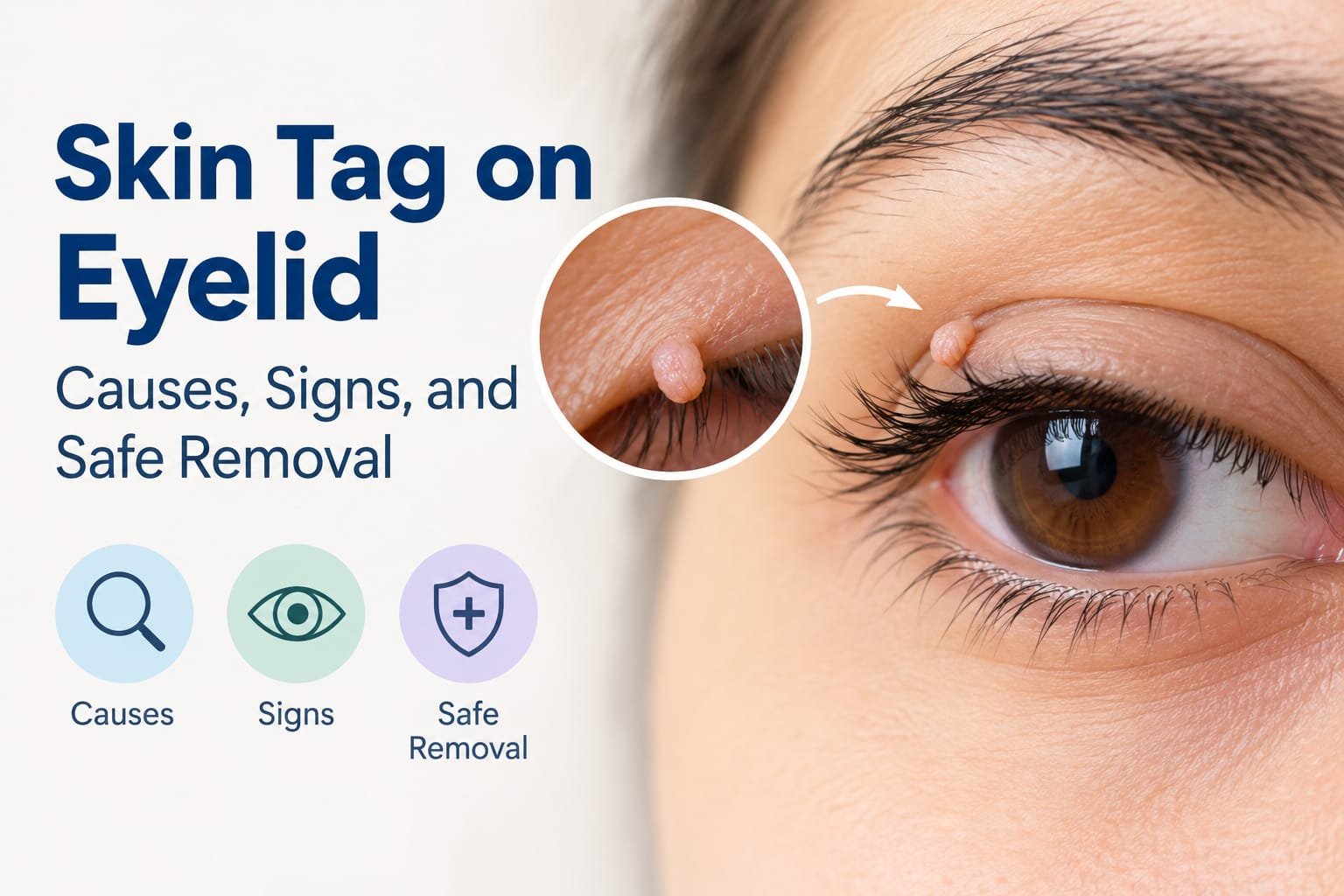
Skin Tag on Eyelid: Causes, Signs and Safe Removal
Have you ever noticed a tiny piece of skin hanging from your eyelid while looking in the mirror or applying makeup? It may seem that a little growth in the area of your eyelids bothers you.
A skin tag on eyelid is usually harmless. It appears to be small, soft, and having a similar color to your skin. Most skin tags do not cause any pain. Nevertheless, there can be cases where it hurts while rubbing against the eyelashes or disturbing your vision.
It is necessary to understand the causes of skin tags and methods of their safe removal. The skin on eyelid is too fragile and sensitive. That is why one should not think about removing skin tags at home. You can learn more about the damaged skin barrier to understand how to protect your skin and keep it healthy.
What Is a Skin Tag on the Eyelid?
A skin tag is a tiny piece of additional skin. It can protrude from the skin due to the presence of a thin stalk. It can be found on the neck, under the arm, or around the eyes.
Eyelid skin tags are usually soft and smooth. They have the same color as your skin, although there can be a dark shade. Skin tags can develop on both upper and lower eyelids.
Skin tags develop very slowly. They remain the same size for a long period of time. There are small tags that may not even be noticed in the beginning.
A skin tag is not considered as a threat to the person's health. However, in case of the appearance of a skin tag, a person should visit a doctor.
Causes of Skin Tags Around the Eyes
There are several factors that contribute to the development of skin tags. Often, there can be several factors involved.
1. Constant Rubbing
The eyelids rub each other when a person blinks every day. In addition, skin may be rubbed against another piece of skin. This process leads to the formation of skin tags.
2. Aging Process
Skin tags are more common among older people.They may appear on different parts of the body, including the eyelids.
3. Family History
Skin tags could occur in people who have a history of skin tags in their families as well. Genetic factors could have an effect here.
4. Diabetes and Obesity
Skin tags could occur in certain people with diabetes or obesity. But skin tags do not necessarily indicate a case of diabetes.
5. Hormonal Changes in Pregnancy
Certain hormonal changes in pregnancy could cause certain skin growths to develop. Certain women could experience skin tags during their pregnancy.
Skin tags can even develop for no apparent reason. This does not necessarily indicate a medical problem in any way.
Is a Skin Tag on Eyelid Cancer?
When a growth appears near one’s eye, many become concerned about this problem. One common concern is the fear that there could be a possibility of skin tag on eyelid cancer.
Fortunately, most eyelid skin tags are benign. It means that they are non-cancerous. Such growths usually tend to be soft and relatively small.
Nevertheless, it is not true that all growths that appear to look like skin tags really are skin tags. There is a possibility of such benign skin growths being skin cancers. Therefore, you should never diagnose skin growth by yourself.
There are certain things you should pay attention to:
- Bleeding of the growth without any apparent cause
- Development of sores on the growth that do not heal
- Color/shape changes
- Constant pain or irritation
- Lack of eyelashes near the growth
All of these symptoms may not necessarily mean that the skin growth is cancerous, but it still needs to be checked by a dermatologist or ophthalmologist.
What Is a Skin Tag Under Eye?
A skin tag under eye is basically a small growth that forms under the lower eyelid. The growth could be in the form of a piece of skin or a soft lump.
Skin tags under the eyes form due to reasons similar to those that affect the eyelids. They include factors such as aging, family history, and friction of the skin.
Your under-eye skin is quite thin and delicate compared to other areas of your skin. Substances that could be harmless to other parts of your body could irritate the under-eye skin when used.If you notice a new bump in your under-eye area, visit a physician to examine it if you are not sure what it is.
Is a Skin Tag on Eyelids Problematic?
Skin tags usually do not give rise to any serious problems. The reason for this is that most individuals prefer to leave their skin tags alone, as they do not experience any pain due to these growths and they do not affect their daily functioning in any way.
However, if a skin tag forms around the eyelashes, then it could become a problem, as it could get tangled in the hair and cause irritation to the eye.It may even become painful.
If the growth continues to irritate you, bleed, change its appearance or impair your vision, you need to see a doctor as soon as possible.
How Can You Remove a Skin Tag on the Eyelid?
If a skin tag is troubling you, it can be removed by a qualified medical expert. A dermatologist or ophthalmologist can check the skin tag and decide on the most appropriate mode of action.
Some possible modes of removing skin tags include:
1. Scissor Excision
A physician may anesthetize the skin tag and use sterile medical scissors or another appropriate instrument to cut off the skin tag. This procedure is common for small skin tags.
It should not be attempted at home because even a minor cut near the eye will result in bleeding, infection, or injuries.
2. Cryotherapy
This technique involves destroying tissues using extreme cold temperatures. A qualified medical expert decides on the applicability of this method for particular skin tags.
Due to the proximity of the eyelid to the eye, careful planning is required before the treatment.
3. Electrosurgery or Electrocautery
In these techniques, tissues are removed using heat or electricity. A qualified professional performs such a procedure using appropriate instruments while protecting the eye from the procedure.
Can You Remove an Eyelid Skin Tag at Home?
No. You should not attempt to remove your eyelid skin tag at home.
You should never use home removal tools, tea tree oil, and strings close to your eyes, since there is a chance that you will get burned, swell, bleed, get infected, and hurt your eyes in one way or another.
Do not cut the skin tag with scissors and remove it by pulling it with your fingers. In addition, do not apply any chemicals such as acids to this area without consulting your doctor.
It is important for you to maintain cleanliness in this area. In case the skin tag catches on your eyelashes or is irritating, please seek the opinion of a dermatologist or ophthalmologist.
How Can You Take Care of Your Eyelid After Removal?
Your doctor will give you post treatment care instructions which you must adhere to.
Here are some general instructions:
- Wash your hands before touching the area of the skin.
- Do not irritate or rub the skin that was treated.
- Apply only the prescribed medications or eye drops by your doctor.
- Do not apply any makeup on that part of your skin.
When Should You See a Doctor?
It is necessary to visit a doctor and clarify the nature of the appearance of the growth on the eyelid if it appears suddenly. It is especially necessary to consult the doctor if it quickly grows, bleeds, becomes ulcerated, or affects your vision.
In such cases, a doctor can examine the growth and inform about its nature. It can turn out that the growth is neither a skin tag nor something else and further examination is required.
It is vital to visit a doctor immediately if there is eye pain or a rapid change in vision.
Conclusion
In most cases, skin tag on eyelid is a benign growth that arises due to friction of the skin, aging, and heredity. They are treated only in case of causing discomfort or vision loss.
In some cases, the growths located close to the eye are not skin tags. The alteration of their size, shape, or color is an indication to consult a doctor because although most of the skin tags are not malignant tumors, medical examination can exclude other diseases.
Do not cut, tie, or apply any treatment methods to the skin tags near your eyes at home. A dermatologist or ophthalmologist can examine the growth and remove it safely when needed.