
Celtic Salt Benefits: Health Advantages and Uses
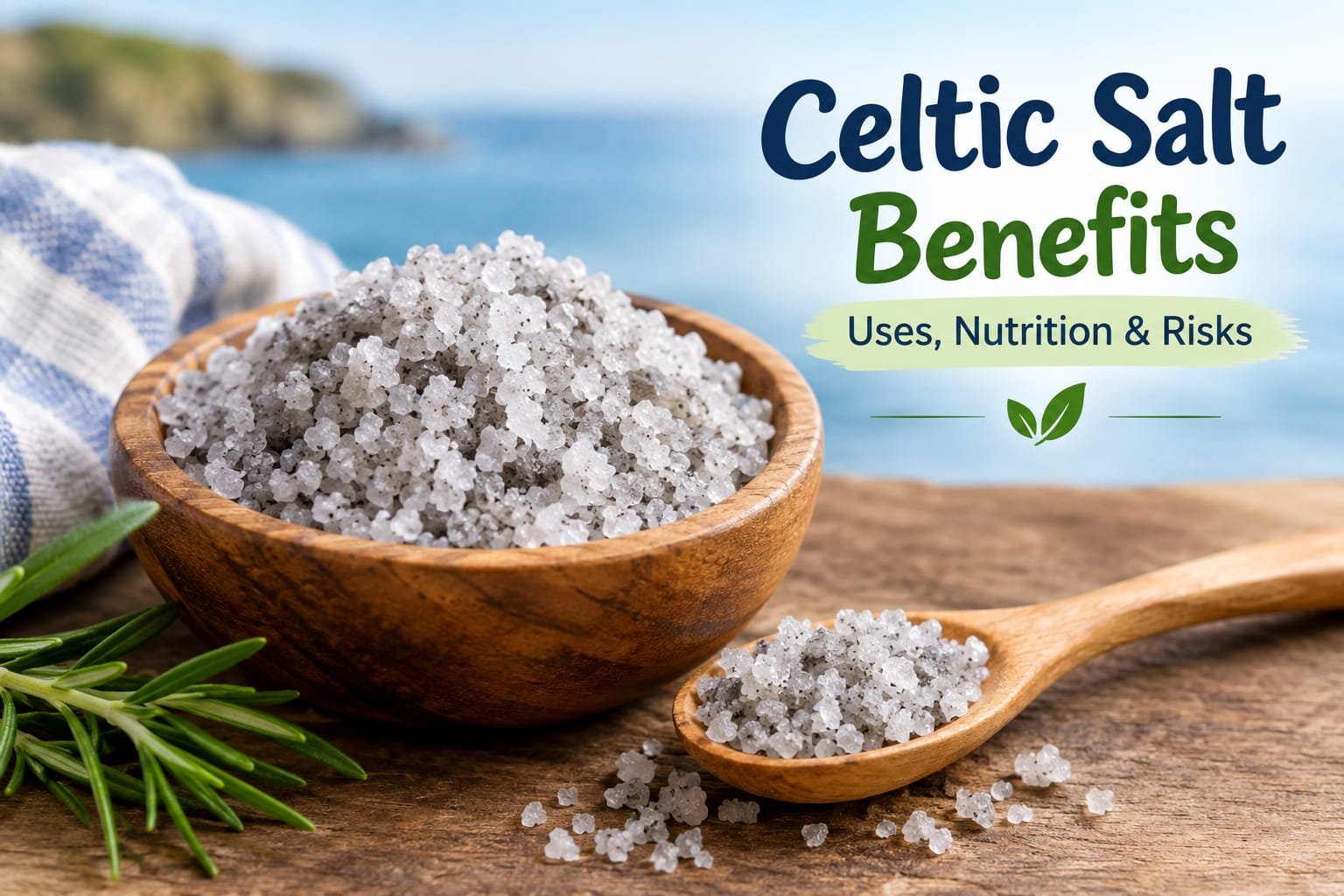
Celtic Salt Benefits: Uses, Nutrition and Potential Risks
Celtic salt is a kind of sea salt which is gray in color. It is also known as gray salt. It is produced through evaporating seawater in shallow ponds. Sometimes, these ponds contain clay which gives the salt its gray color.
Celtic salt is popular among people because it is less refined than common table salt. Also, it contains some amount of minerals. Some people think that this salt can increase the hydration level and improve your health.Celtic salt contains sodium, so learning how to read nutrition labels can help you understand the salt content in packaged foods and make healthier choices.
But it is necessary to understand the advantages and disadvantages of this product.In this article, you will get information about celtic salt benefits, uses, nutrition and its potential risks.
What Is Celtic Salt?
Celtic salt is an unrefined kind of sea salt that is harvested manually. It is not refined like common table salt and that is why it maintains its moisture and color.
Celtic sea salt is mostly made up of sodium chloride and comprises a trace amount of minerals like magnesium, calcium, potassium, iron, and zinc.Trace elements refer to the very low quantities of minerals that are present in the salt. Therefore, Celtic salt cannot be the primary source of minerals. Unlike many forms of table salts, Celtic sea salt does not contain iodine. This element is essential for the proper functioning of the thyroid gland which regulates the metabolism of the body.
Primary Benefits of Celtic Sea Salt
There are several celtic sea salt benefits. These may be related to cooking or associated with its natural composition. Let us consider the following points.
Trace Amount of Minerals in the Sea Salt
Celtic sea salt is known to contain a trace amount of natural minerals. These can be magnesium, calcium, and potassium among others.
The body needs these minerals for its several processes. For instance, calcium is responsible for keeping the bones healthy, whereas potassium plays an important role in muscle activities.
It May Help Support Fluid Balance
Your body requires sufficient amounts of water and electrolytes in order to function properly. Sodium is one of the major electrolytes in the human body, and it regulates the water balance in and out of cells.
A small quantity of Celtic salt may be added to your drinking water to promote hydration.
Most people on a healthy diet and sufficient hydration do not need to add extra salt to their water. The addition of salt does not necessarily mean that it will increase the benefits of drinking water.
In some situations such as heavy sweating, physical training, and some diseases, your body requires additional electrolytes. Then an appropriate electrolyte solution may be of more use than salt water.
It Adds Flavor to Food
Celtic salt is characterized by its intense taste and rough structure. In addition, the presence of natural moisture makes it unique compared to common salt.
It can be sprinkled on vegetables, meat, eggs, and baking. This way, you can add some flavoring to your food.
Celtic salt may also be used in soups, sauces, and other dishes. You should be careful because of the high content of salt.
It Can Be Used in Warm Baths
Some people put sea salt in their bathwater and take it as part of a relaxation bath.
Taking a warm bath may have a calming effect on you as well as reducing the pain and discomfort of tired muscles. The celtic salt can be used just like any other bathing salt.
There is no scientific research that confirms the benefits of celtic salt in particular for muscle pains or nervous system.
On the contrary, salt baths can irritate the cracked, dry or sensitive skin.
Health Benefits of Celtic Salt on Daily Life
Celtic salt benefits are associated mainly with the mineral content, texture and food application. But it is necessary to distinguish facts from health claims.
The celtic salt is rich in sodium, which is required by the human body in tiny quantities. Sodium plays an important role in fluid regulation and normal functioning of muscles and nerves.
However, most people consume sufficient amounts of sodium with the food they eat. Excessive consumption of sodium can cause high blood pressure.
Moreover, the celtic salt has nothing to do with improving energy level, insomnia or any kind of deficiency of minerals.
Celtic Salt vs. Regular Table Salt
Celtic salt and table salt have some differences.
- Celtic salt tends to be gray, damp, and coarse, while table salt tends to be white, dry, and fine.
- Table salt is normally refined and might have added iodine, while Celtic salt normally lacks any added iodine.
- Celtic salt usually does not contain added iodine.
- Celtic salt may provide slightly less sodium in a spoonful because its larger, moist crystals leave more space between them.
- This does not mean that it is always lower in sodium by weight.
If you use Celtic salt instead of iodized salt, make sure you get enough iodine from other sources, such as dairy products, eggs, seafood, or foods that contain added iodine.
How to Use Celtic Salt Safely?
One can add Celtic salt to their daily diets, but they should be careful.
Some of the tips include:
- Using only a small amount of the salt while preparing meals.
- Using it to sprinkle over the foods for additional flavor.
- Not using salt to flavor every drink.
- Checking the food labels as the pre-prepared foods could have a lot of sodium in them.
- Eating foods rich in minerals like fruits, vegetables, beans, and nuts.
- Consuming enough iodine through your diet.
According to the World Health Organization, one should consume less than 2,000 mg of sodium a day, which means that you can only take less than 5 grams of salt. This applies to all types of drinks and foods, and some patients may require different intake of salt depending on their condition.
Potential Side Effects of Celtic Salt
Celtic salt is generally harmless to anyone who uses it in the right amount in their balanced diets. However, consuming the salt in large amounts can be dangerous.
High Blood Pressure
High amounts of sodium increase the blood pressure of some people.
Water Retention
A high level of sodium in a person's diet may also lead to excess fluid retention in the body. This may result in edema or even bloating for some individuals.
Low Iodine Intake
Usually, Celtic salt does not contain iodine. Therefore, if an individual relies solely on this salt and does not get any additional sources of iodine, he or she may be at increased risk of iodine deficiency.
Individuals with kidney problems, high blood pressure, and heart diseases should consult their doctor regarding how much salt they should consume.
Are Celtic Salt Health Benefits Superior to Regular Salt?
Though the celtic salt health benefits may be remarkable, there is actually no reliable evidence indicating that this salt is significantly better for a person's health compared to regular salt. Both salts consist mainly of sodium chloride.
Celtic salt has a distinctive taste and texture. In addition, it has trace amounts of other minerals, but they are too small to bring substantial health effects.
In comparison, regular iodized salt has one great benefit – it may help obtain iodine required for the production of thyroid hormones.
Conclusion
Celtic salt benefits include adding taste to food, having an alternative that is less processed, and providing trace amounts of natural minerals. It may be helpful to incorporate Celtic salt into many dishes.The main component in Celtic salt is sodium chloride.
The supply of minerals contained in the salt is not adequate to replace a healthy meal, and there is no need for its addition to water. An excess intake of salt can cause elevated blood pressure levels and result in additional complications.
It is advised to consume Celtic salt in moderation, drink enough water, and maintain a balanced diet. More information about sodium and iodine consumption can be obtained from a medical professional.